The Rise and Fall of DEI in Corporate America
Were diversity efforts genuine, or just optics?

Corporate DEI teams expanded rapidly after 2020 and have been shrinking just as fast since. This Research Insights issue examines the rise and retreat of corporate Diversity, Equity, and Inclusion (DEI) teams in corporate America, their measurable impact on workforce diversity, and the outcomes for DEI professionals as companies scale back these efforts.
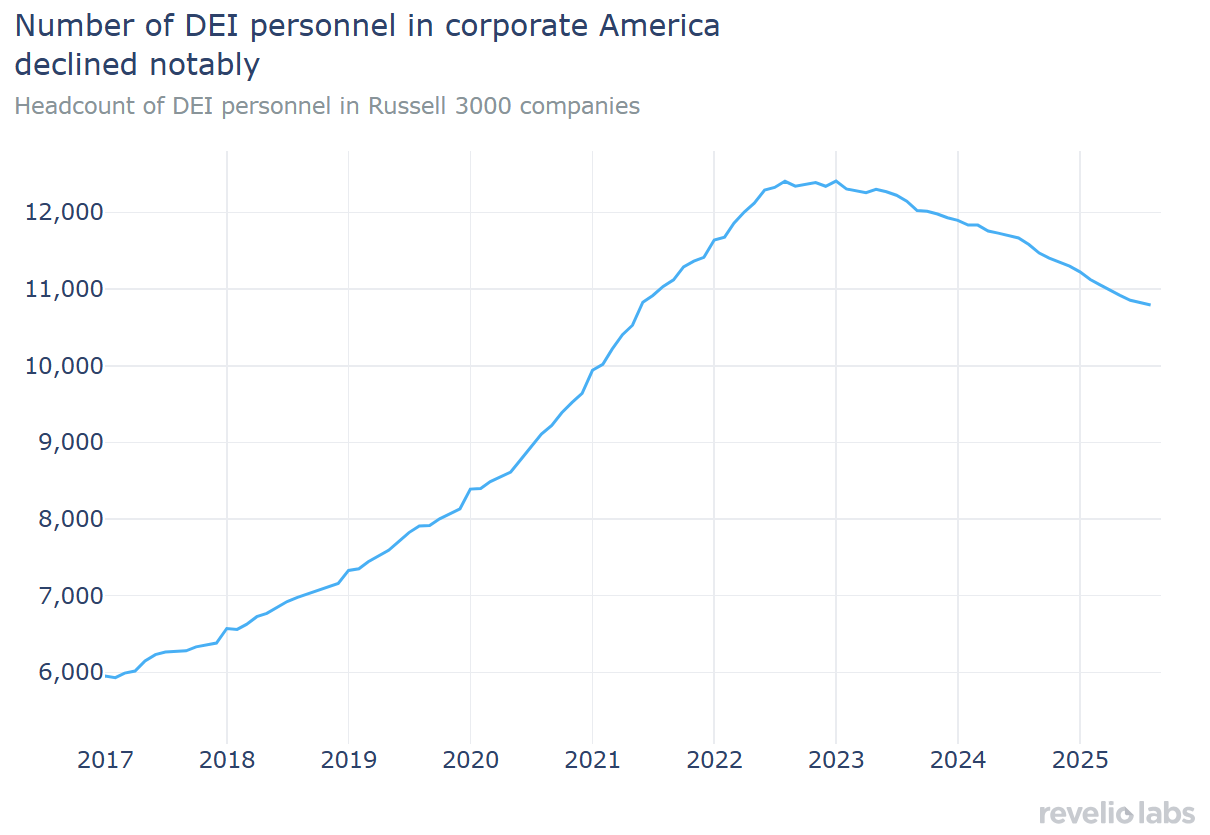
The Rise and Fall of DEI Headcount
Over the past decade, DEI has become a central theme in workplace debates. The murder of George Floyd in 2020 and the subsequent racial justice movement prompted many firms to make public commitments to diversity, driving a surge in demand for DEI professionals. Companies rapidly expanded their DEI teams, but this momentum did not last. By 2022, demand for DEI roles was declining faster than for nearly any other function. By 2024, as the political climate grew less supportive of DEI, many firms significantly reduced the size of their teams or eliminated them altogether. Among Russell 3000 companies, DEI headcount has fallen by about 15% from its peak in mid-2022.

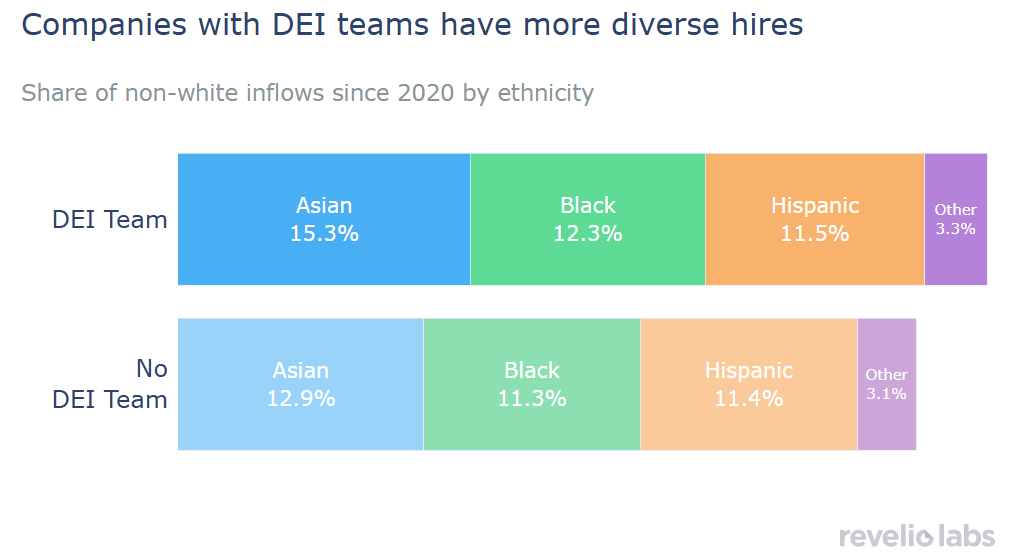
Did DEI Teams Change Who Got Hired?
Throughout this analysis, a "DEI team" or "DEI role" refers to positions Revelio Labs identifies through job titles and functional tags explicitly tied to diversity, equity, and inclusion work, which is distinct from general HR roles. The recent wave of DEI team cuts raises a key question: were these initiatives genuinely aimed at reshaping workforces, or were they primarily symbolic? Our analysis shows a clear effect: Companies with dedicated DEI teams consistently hire a higher share of Asian, Black, and Hispanic employees than those without. This indicates that DEI professionals play a pivotal role in diversifying talent pipelines through targeted outreach and more inclusive hiring practices.
The Effect on Employee Sentiment
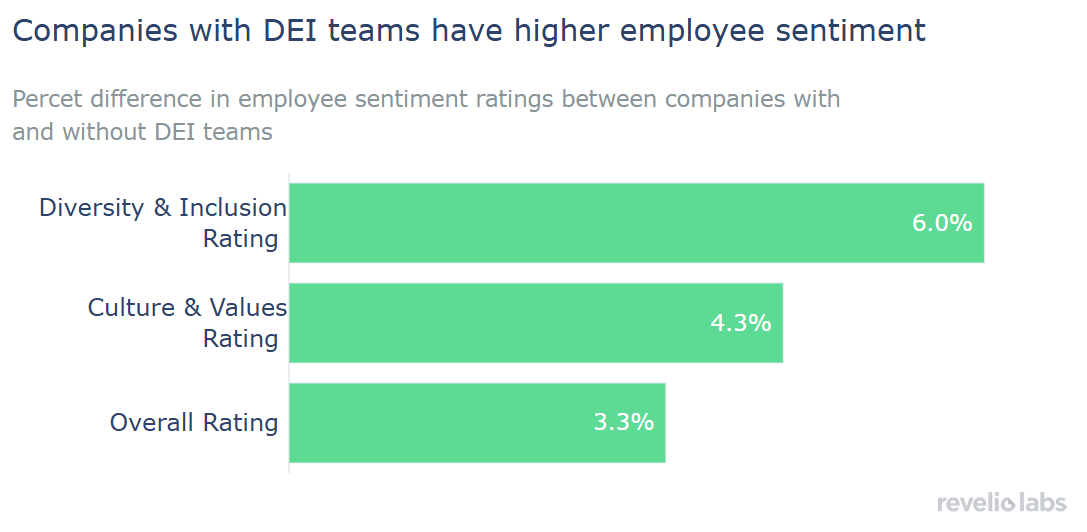
Beyond hiring, DEI teams have also influenced how employees feel about their workplaces. Employees at companies with DEI teams consistently report higher satisfaction, especially when it comes to culture and values and workplace diversity and inclusion. These differences are most evident in the ratings of women and employees of color.
The Political Backdrop
The initial decline, beginning in 2022, tracked broader corporate retrenchment: sweeping layoffs across technology and finance often hit DEI teams disproportionately hard. With the start of President Trump's second term, dismantling DEI programs has become an explicit policy priority. The White House has criticized corporate diversity initiatives, amplifying broader conservative narratives that portray DEI as divisive or discriminatory. Many Russell 3000 firms have since rolled back their DEI commitments, accelerating a trend already underway since 2022.
Where Do Former DEI Professionals Go?
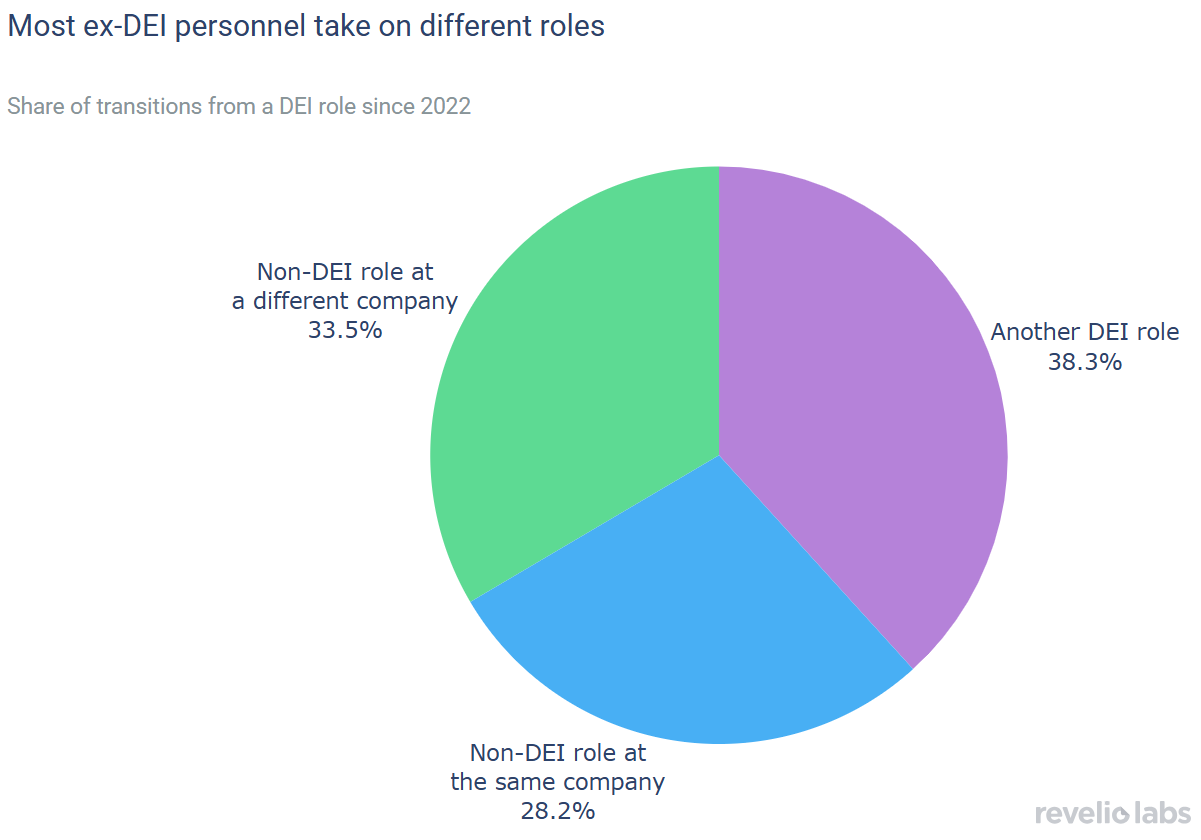
As these programs scale back, the focus shifts to the futures of DEI professionals. Revelio Labs data reveals that 55% of DEI workers leaving these roles moved into non-DEI positions at new organizations, while 37% remained at the same company but transitioned into different functions. Only a small minority found new DEI jobs elsewhere.
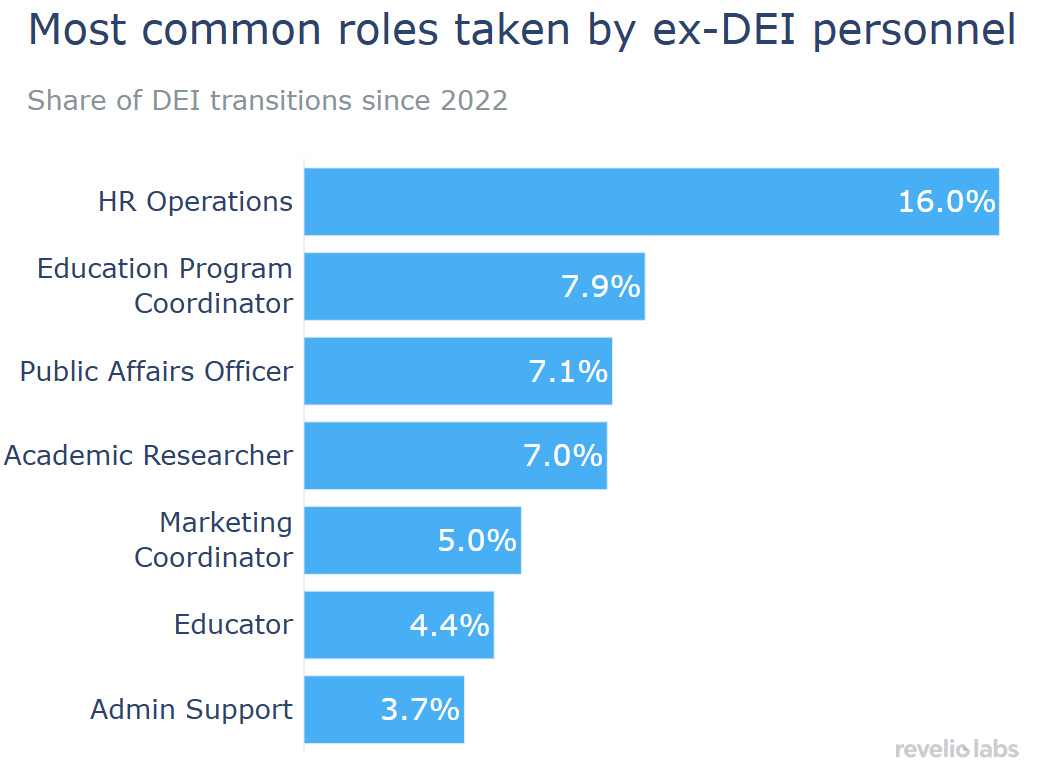
Many former DEI professionals have carried their expertise into adjacent areas. A notable share now work in broader HR functions, particularly in recruitment, employee relations, and organizational culture, where their background in workplace equity continues to add value. Others have transitioned into roles in public affairs or education.
The data suggests these efforts were not merely symbolic: companies with dedicated DEI teams hired measurably more diverse talent and recorded higher employee sentiment scores–particularly among women and employees of color–than companies without them. Whatever their political fate, DEI teams appear to have done what they were designed to do.
As companies reassess their commitment to DEI, it’s important to understand what these shifts mean for workplace diversity and equity. Our full report examines how DEI roles shape hiring outcomes, where DEI professionals go when priorities change, and the long-term implications for building inclusive workplaces.